
Influencer marketing rarely fails all at once. It usually breaks in small, quiet ways.
At DRYFT Fishing, creator partnerships were already part of their growth strategy. Paid ads brought traffic, organic search did its job, and influencers helped spread the word.
But as more creators got involved, it became harder to tell which partnerships were actually driving sales.
Coupon codes traveled further than intended. Attribution started to blur. And paying upfront didn’t always reflect real performance.
DRYFT didn’t need more influencers. They needed a better way to connect creators to results.
That’s when they built an affiliate program using Affiliate for WooCommerce.
Meet Nick and DRYFT Fishing
DRYFT Fishing is a direct-to-consumer fishing gear brand founded in 2012 by Sam Thompson and Nick Satushek.
The brand designs and sells high-performance fishing gear, especially waders, built for real conditions on the water.
DRYFT operates independently and sells directly to customers, without relying on marketplaces or retail intermediaries.
Because of that direct-to-customer model, every sale runs through WooCommerce. Marketing decisions directly affect margins, customer data, and growth.
DRYFT designs its products “on the river,” focusing on real-world performance, durability, and accessibility.
You can find DRYFT here:
What struggles DRYFT faced before Affiliate for WooCommerce?
For a direct-to-consumer brand like DRYFT, growth doesn’t come from a single channel.
Paid ads, organic search, social media, and word of mouth all played a role in bringing customers to the store.
Influencers and creators were added on top of this mix to extend reach and credibility.
That’s where things started to get complicated.
- Paying creators upfront increased visibility, but results varied and required constant oversight.
- Coupon codes helped with tracking at first, but many leaked onto coupon aggregator sites, making attribution unreliable.
- There was no clean way to track direct referrals from individual creators.
- Comparing creator performance meant relying on assumptions instead of clear data.
- As sponsorship, ambassadorship, and free-product requests grew, managing payouts and follow-ups added manual work instead of efficiency.
What DRYFT needed wasn’t more traffic. They needed clarity, control, and a way to reward results without increasing overhead.
How did DRYFT discover Affiliate for WooCommerce?
DRYFT started looking for a better way to work with creators and industry insiders. They wanted to move away from direct pay models that demanded constant oversight.
Coupon-only tracking no longer worked, and relying on it made attribution worse, not better.
The team explored affiliate-style setups, but most options didn’t fit how DRYFT operated.
They didn’t want to open the program to everyone or add another system to manage.
They needed a way to:
- Track sales through direct referrals
- Tie payouts to real results
- Keep everything inside WooCommerce
Most importantly, they wanted a process that reduced manual work as partnerships grew.
Why did DRYFT choose Affiliate for WooCommerce?
DRYFT needed an affiliate system that worked inside WooCommerce without disrupting how the store already operated.
The team tested our Affiliate for WooCommerce plugin on a staging site first. It handled link-based tracking correctly, integrated natively with WooCommerce, and didn’t require changes to existing checkout or order workflows.
Transitioning their existing affiliates, only a few at the time, took minimal effort.
Just as importantly, the plugin supported the kind of control DRYFT was looking for.
It allowed them to manage referrals, commissions, and payouts centrally, without introducing external tools or manual workarounds.
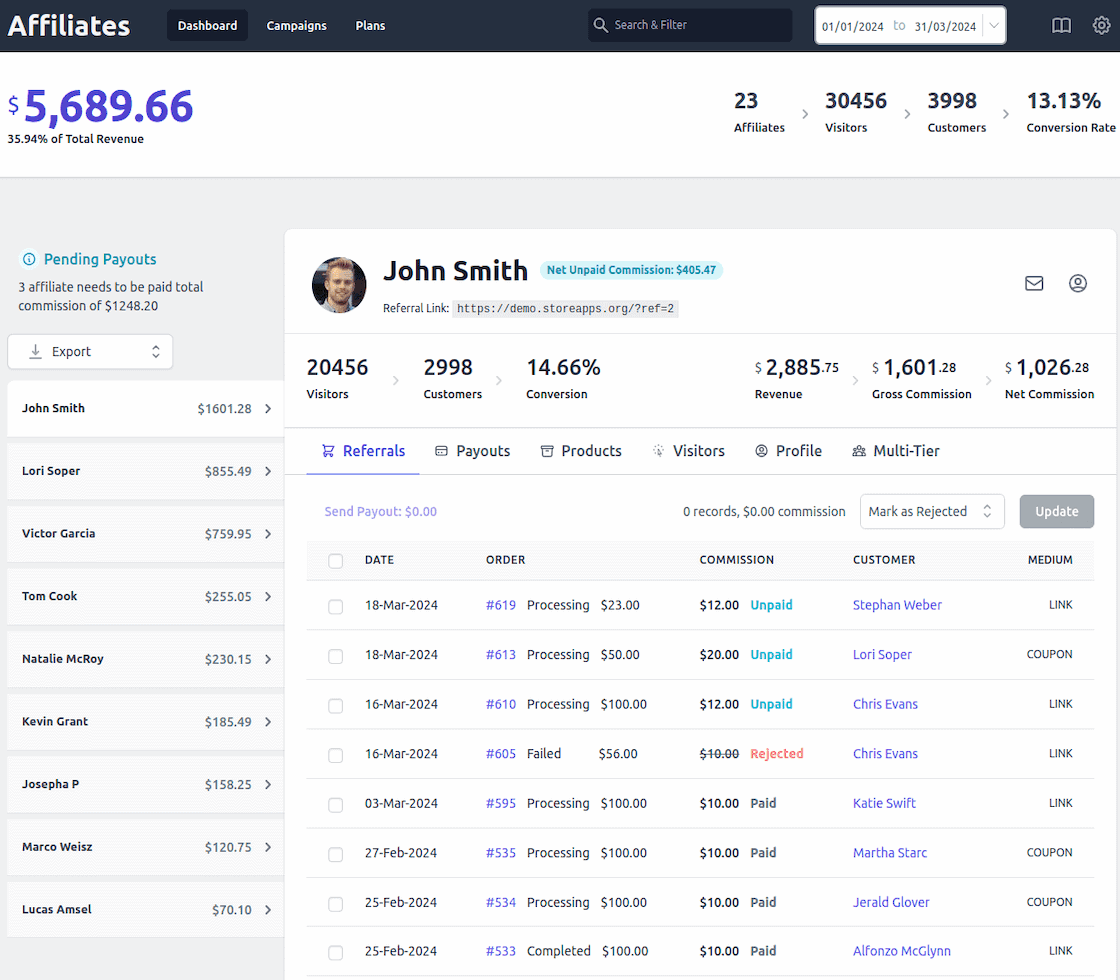
Instead of forcing DRYFT to adapt its process to a new system, Affiliate for WooCommerce fit into how the business already ran. That alignment made it the right choice.
How Affiliate for WooCommerce changed DRYFT’s affiliate workflow?
Once DRYFT moved its affiliate program to Affiliate for WooCommerce, the way they worked with creators changed completely.
- The first shift was attribution. DRYFT stopped relying on coupon-only tracking and started using referral links. That alone removed much of the guesswork.
The team could finally see which creators were driving sales and which partnerships needed rethinking.
- Next came consolidation. Instead of juggling spreadsheets, coupon codes, and manual follow-ups, DRYFT managed affiliates, referrals, and payouts from a single dashboard.
What used to take constant monitoring now fits into a repeatable workflow. - The program itself also became intentional. When sponsorship, ambassadorship, or free-product requests come in, DRYFT no longer handles them ad hoc.
The team invites select creators into an invite-only affiliate program, sets terms upfront, and ties payouts directly to results. Reach alone no longer determines value, performance does.
This structure made scaling possible without increasing overhead.
As the program grew, manual effort didn’t grow with it. DRYFT could add partners without adding chaos.
Today, DRYFT runs its affiliate program with 19 active affiliates and a clear process behind every partnership.
Try Affiliate For WooCommerce live demo
Why does DRYFT recommend Affiliate for WooCommerce plugin?
For DRYFT, Affiliate for WooCommerce brought clarity and control to how they work with creators.
It gave them reliable attribution, predictable payouts, and a structured way to run an affiliate program without increasing manual work.
Support also played a role, with quick and helpful responses when needed.
As Nick Satushek puts it:
If control and clarity matter to how you work with affiliates, you’ll likely see the same value DRYFT did.