
Looking for coupon promo code ideas you can just copy and use in your WooCommerce store? You’re in the right place.
This is a practical, no-fluff list of 25 proven coupon code ideas, from welcome discounts and free shipping to BOGO, referral, and abandoned cart coupons, with real examples and ready-to-use code patterns.
Whether you’re trying to:
- Attract more first-time customers
- Recover those abandoned carts
- Bring customers back for repeat purchases
- Make your seasonal sales pop
There’s something here that’ll work for you.
Bookmark this page. You’ll come back to it every time you plan a promotion.
How to choose the right coupon code (before you copy one)?
Before you pick a coupon from the list below, ask just one thing:
Why is the customer not buying right now?
Answer that first, and choosing the right coupon becomes easy.
A few things to keep in mind:
- In 2026 alone, shoppers are expected to redeem hundreds of millions of digital coupons, and as per stat, nearly 9 out of 10 online buyers actively use or look for promo codes while shopping- which means coupon demand is real.
- But coupons only work when customers see them, remember them, and can apply them, otherwise they back out.
- Nearly 46% of shoppers don’t redeem coupons simply because they forget they have one.
- Around 46% abandon checkout when a coupon code looks invalid or doesn’t apply.
So the real job of a coupon isn’t just giving a discount. It’s removing friction at the exact moment someone is hesitating.
25 coupon code ideas you can copy paste
Here’s a practical swipe file of coupon code ideas you can copy and use, for first-time buyers, abandoned carts, repeat orders, and everything in between.
Welcome coupons
Every store needs this. Not because it’s fancy but because first-time visitors almost always hesitate. Most of them aren’t leaving because the price is wrong.
They’re leaving because they’re not sure about the store yet. A small welcome coupon just helps them take the first step.
Here are some simple, boring, high-converting welcome codes you can literally copy:
- WELCOME10
- HELLO10
- FIRSTORDER
- TRYUS10
- START10
- JOIN10
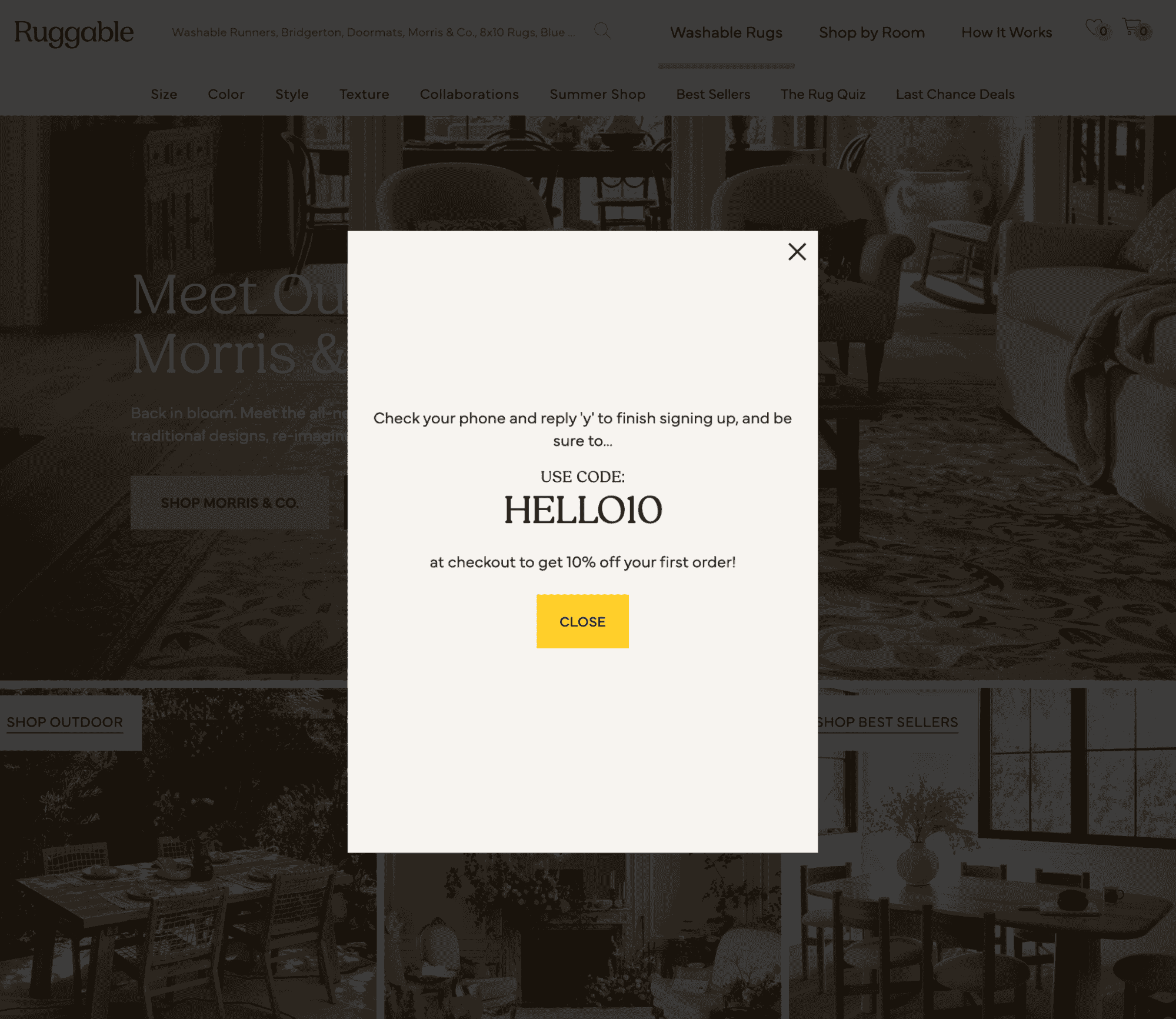
Ruggable does this really well. They show a clean popup offering 10% off your first order with a code like HELLO10. No conditions. No drama.
Festive & seasonal coupons
During Diwali, Christmas, New Year, or any big sale season, people are already in buying mode. If you don’t give them an offer, they’ll just open another tab.
The coupon here doesn’t create demand, it just helps them choose your store.
Some easy seasonal code patterns:
- DIWALI20
- CHRISTMAS25
- NEWYEAR15
- HOLIDAY20
- FESTIVE10
- WINTERSALE
- SUMMER15
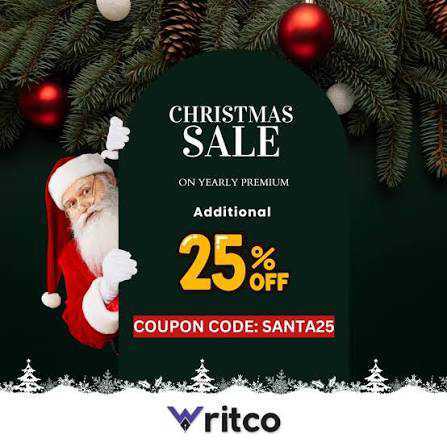
Writco ran a Christmas sale using a simple seasonal code like SANTA25. That’s exactly how most stores do it.
Black Friday / Cyber Monday coupons
This is not the time to be clever. During BFCM, customers are comparing 10 tabs, 20 emails, and 50 offers. Your coupon should be obvious in half a second.
Use codes like:
- BLACKFRIDAY30
- BFCM40
- CYBER25
- CYBERMONDAY
- BLACK30
- BFDEAL
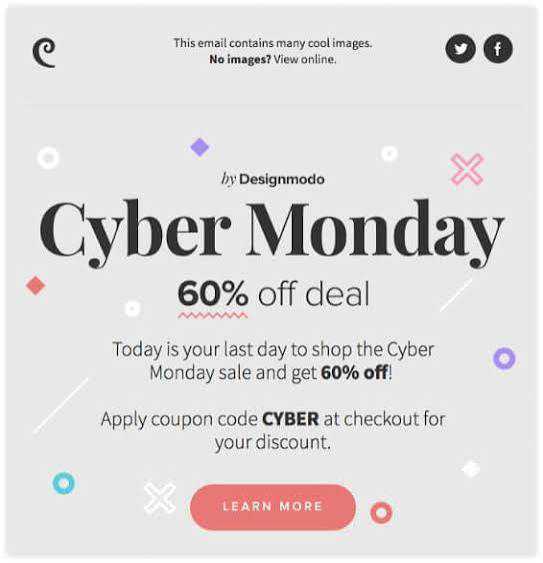
Designmodo ran their Cyber Monday sale using a plain CYBER code for a massive discount. Simple and impossible to miss.
Location-based coupons
These are surprisingly effective when you’re running ads or campaigns for a specific region.
When people see their city or country in the code, it feels like the offer was made for them, not scraped from some coupon site.
You can use patterns like:
- USA10
- INDIA15
- LONDON10
- BERLIN15
- UKSHIPFREE
- NYC20
- LOCAL10
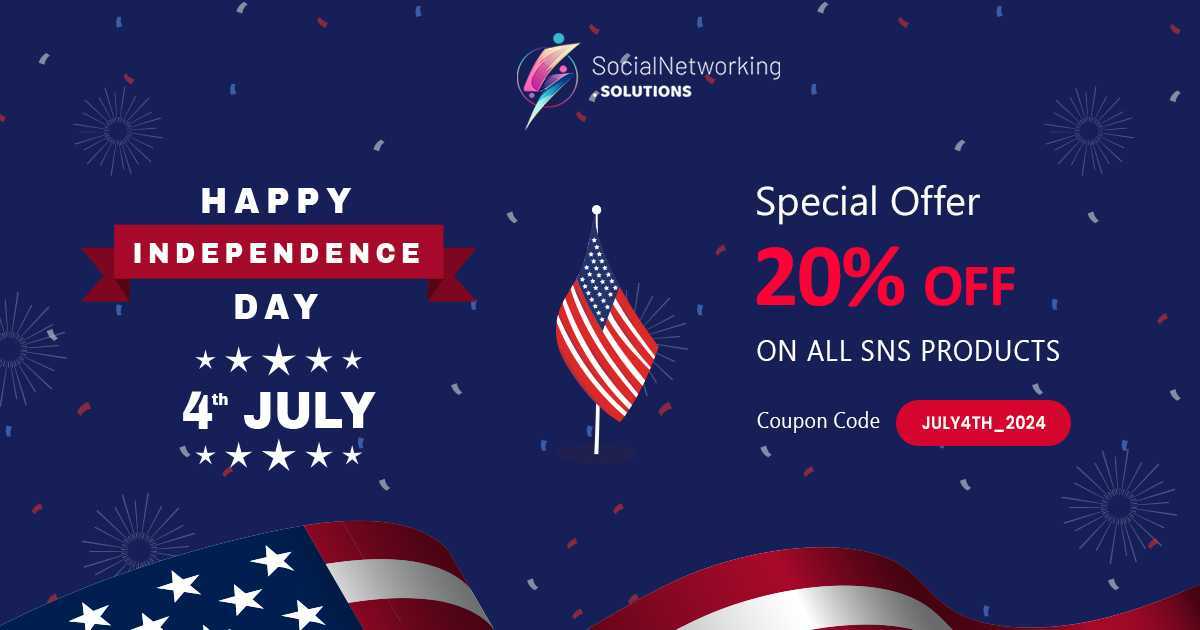
Many brands often run region-specific promotions tied to local campaigns and store locations.
For example, this coupon by Social networking Solutions. This coupon is specifically for US based customers for the 4th July.
Repeat purchase coupons
This is one of the easiest wins that most stores underuse.
Right after someone places an order, they’re at their highest trust point. If you give them a small reason to come back, many actually do.
Some simple, honest codes:
- REORDER5
- NEXTORDER
- BUYAGAIN10
- COMEBACK10
- THANKYOU5
- SEEYOUAGAIN
- RETURN10
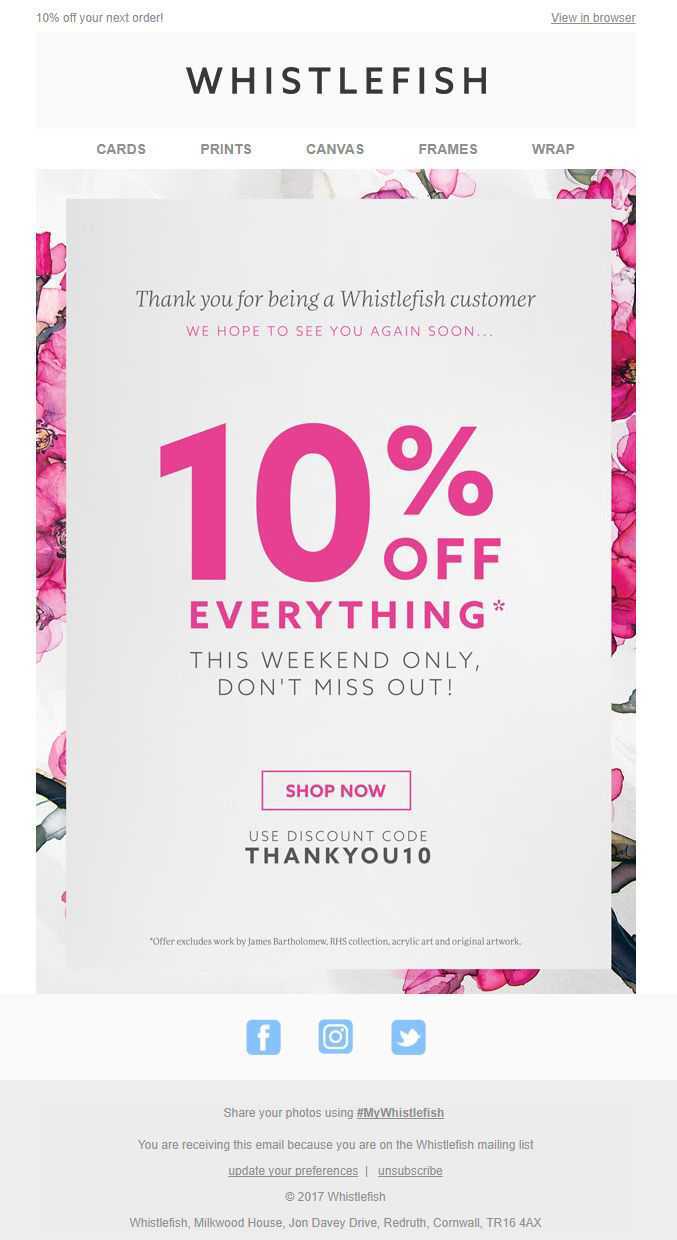
Whistlefish uses a simple “thank you” style follow-up like this, offering 10% off the next order with a friendly code like THANKYOU10. It feels like a reward, not a discount, and quietly nudges customers to come back.
Loyalty coupons
These aren’t meant for everyone, and that’s exactly why they work. Loyalty coupons are for customers who’ve already bought multiple times or spent a lot.
You can keep the codes simple and exclusive-looking:
- LOYAL20
- VIPONLY
- GOLDMEMBER
- THANKYOU40
- INSIDER20
- VIPDEAL
- FANCLUB
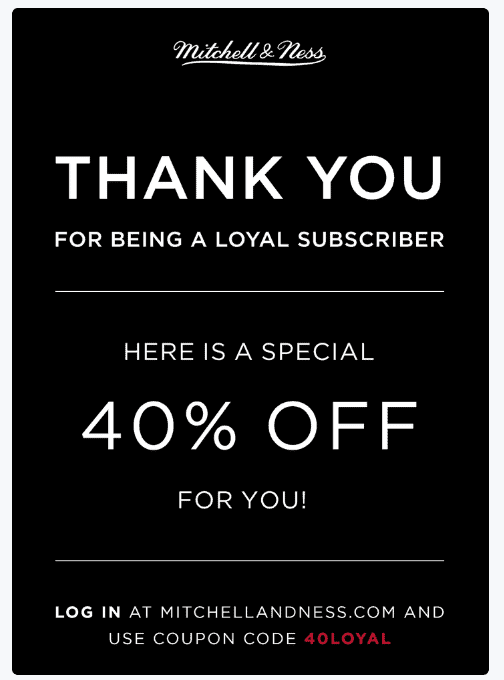
Mitchell & Ness sends loyalty-only discount codes like 40LOYAL to their subscribers as a thank-you. It feels like a reward, not a sale.
Refund / store credit coupons
Refunds hurt. Store credit hurts less.
Instead of sending money back, many stores now give customers store credit they can use later. It solves the problem and keeps the revenue in your store.
Some common patterns:
- STORECREDIT50
- CREDITFORYOU
- KEEPANDSAVE
- SHOPAGAIN50
- WALLET50
- BALANCE50
Many WooCommerce stores now offer store credit instead of direct refunds, especially for returns and cancellations.
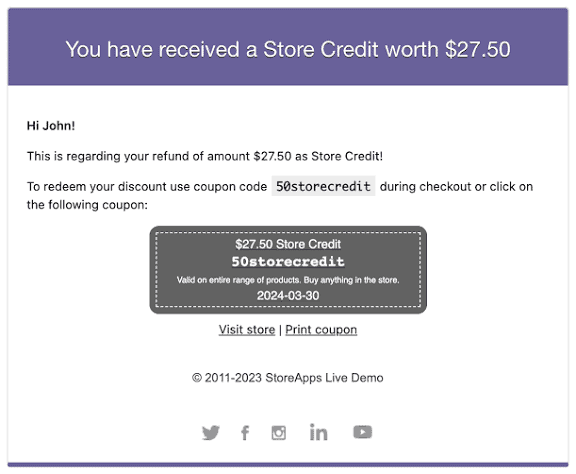
Storeapps also send store credits to users. But some customers prefer cash refunds, of course. In practice, a large number of them do end up redeeming the store credit when it’s easy to use and clearly communicated.
BOGO & clearance coupons
When inventory needs to move, speed matters more than elegance. BOGO works because customers don’t think in margins, they think in “I’m getting more”.
Use blunt, obvious codes:
- BOGOFREE
- BUY1GET1
- FREEITEM
- CLEARANCE50
- LASTCHANCE
- TAKE2
- 2FOR1
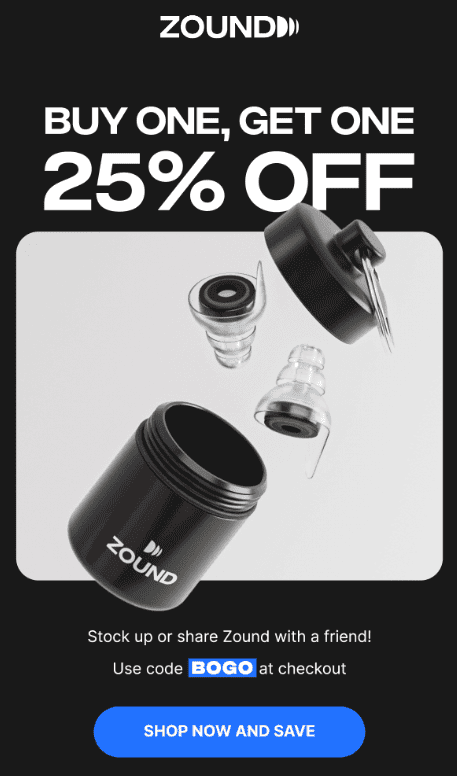
Zound is a classic example of a straightforward BOGO code with a clear “Buy one, get one” message to push multi-item purchases and clear inventory faster, exactly how BOGO campaigns should be run.
Giveaway coupons
Not everyone wins your giveaway, but that doesn’t mean you should waste all that attention.
A small “thanks for participating” coupon converts a surprising number of people.
Simple patterns work best:
- GIVEAWAY10
- THANKYOU10
- TRYUS15
- SORRY10
- BETTERLUCK
- PARTICIPATE10
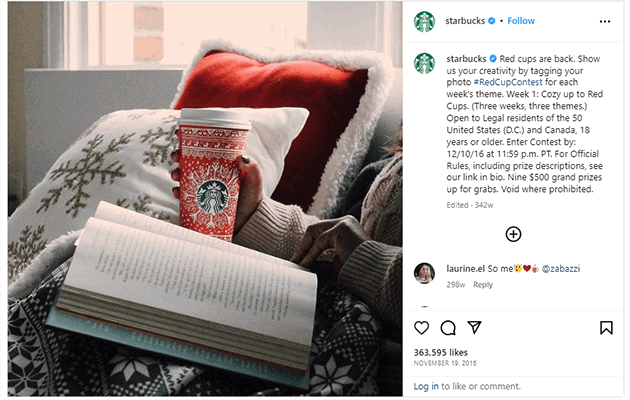
Starbucks’ Red Cup Contest is a great example of giveaway-led engagement. Millions participate, but only a few win. Smart brands use this moment to send a small “thanks for participating” coupon to everyone else and turn that attention into real sales.
Weekly deal coupons
These aren’t exciting, but they’re reliable.
Weekly deals give people a reason to check your store again without waiting for a big sale.
You can rotate simple codes like:
- WEEKEND10
- FRIDAYDEAL
- WEEKLYSALE
- THISWEEK10
- SUNDAYSALE
- WEEKLY10
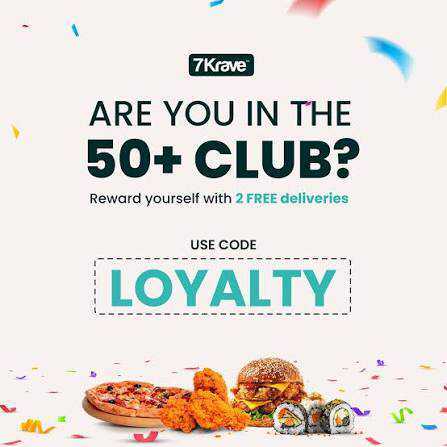
7Krave uses recurring loyalty-style offers like free deliveries and regular deals to keep customers ordering again and again.
Credit card coupons
These are great when you have a payment partner or want to push a specific payment method.
Customers who were anyway going to pay with that card feel like they’re getting a little extra for free.
You’ll usually see codes like:
- BOA10
- VISA20
- AMEXDEAL
- MASTERCARD15
- CARD10
- PAYWITHCARD
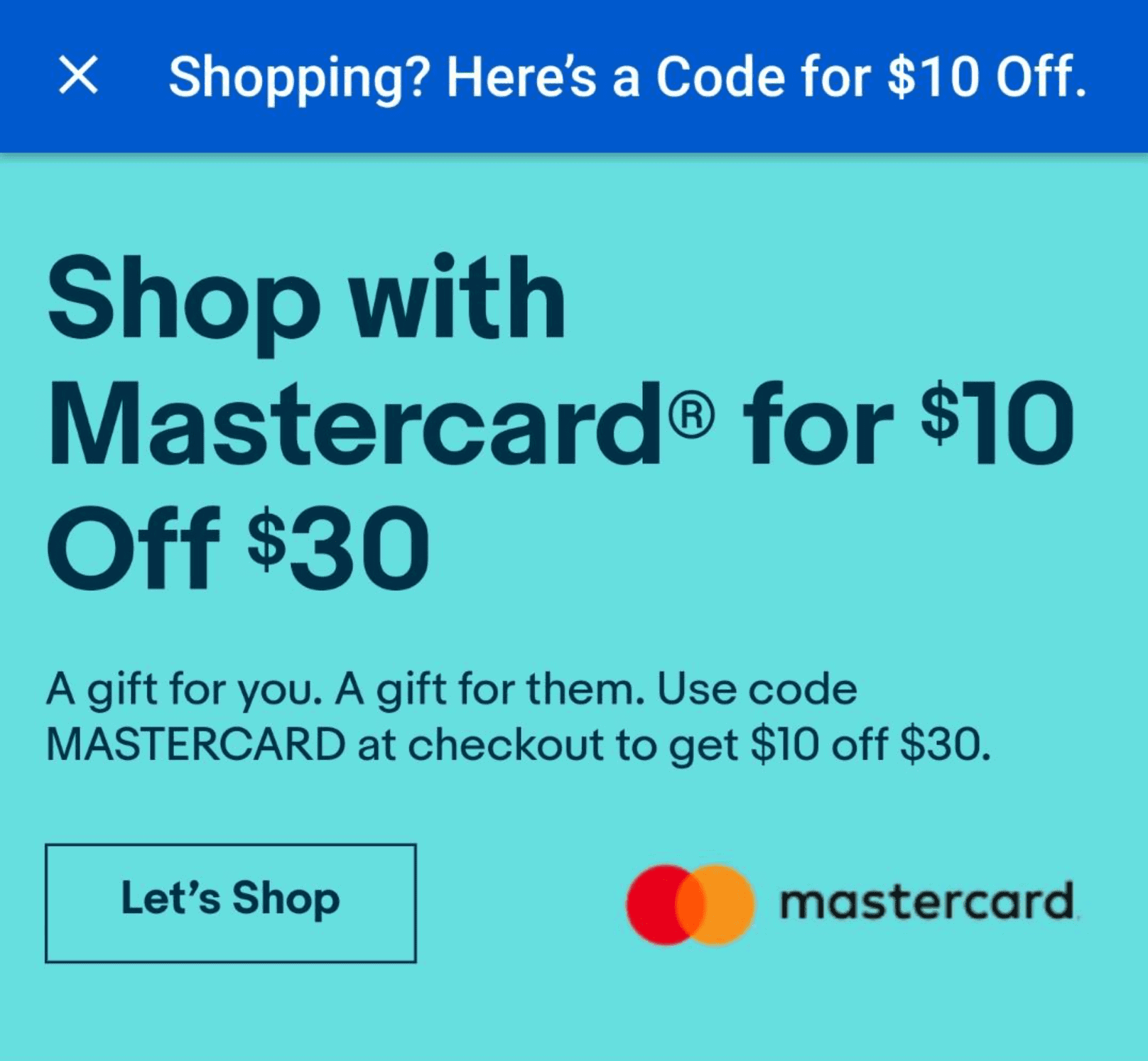
Mastercard frequently runs co-branded offers like “$10 off $30” when you pay with Mastercard, using a simple code (for example, MASTERCARD) and a clear minimum spend.
Flash sale coupons
Flash sales are for moments when you want faster decisions, not more traffic.
These work best when someone is already on the site and just needs a push.
Keep the codes obvious and urgent:
- FLASH30
- TODAYONLY
- SAVE30NOW
- HURRY20
- LIMITED30
- NOWORNEVER
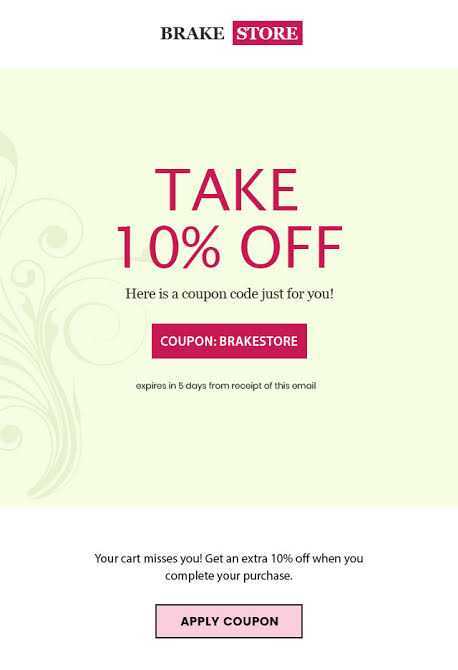
Brake Store is a good example of how fashion and DTC brands use flash coupons, a simple discount, a visible code, and a short expiry window to push checkout completion.
Influencer coupons
These are less about the discount and more about tracking. You immediately know which creator actually drives sales.
Most stores just use the creator’s name:
- JESSICA10
- PRISHA50
- MIKE20
- RAHUL15
- TEAMXYZ
- CREATOR10
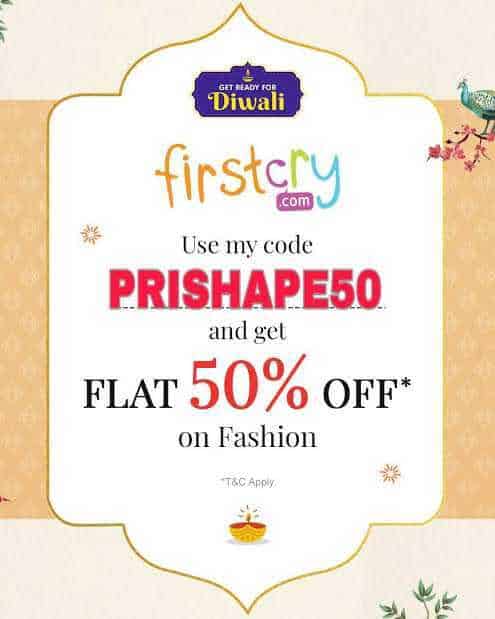
FirstCry often uses influencer-style codes tied to specific creators for attribution.
Launch coupons
These are for the people who sign up early and show interest before a product goes live. It makes them feel like insiders.
Simple patterns work best:
- EARLYBIRD20
- PRELAUNCH15
- FIRSTACCESS
- EARLY10
- VIPACCESS
- LAUNCH20
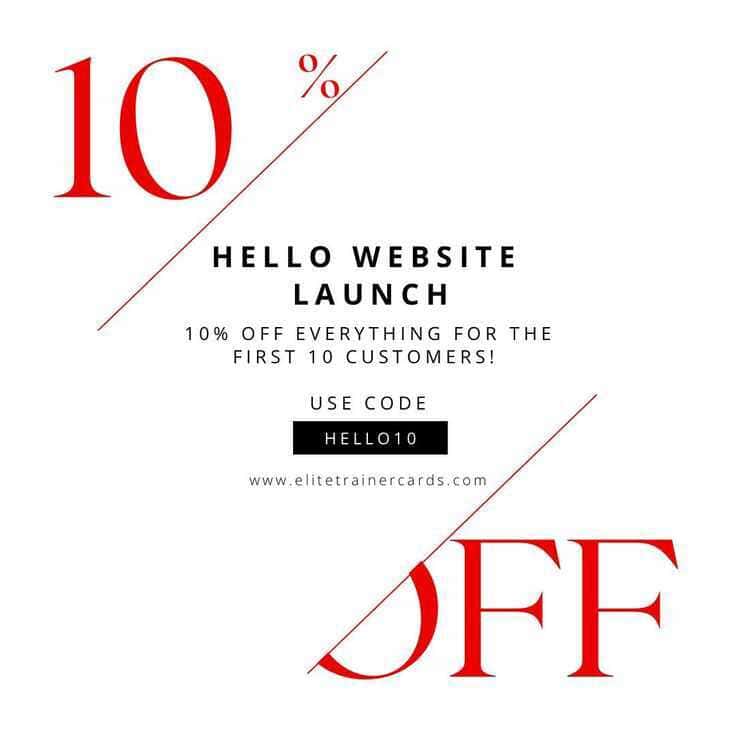
Elite Trainer Cards used a simple launch offer, 10% off for the first customers with a clear code (HELLO10), to drive early orders right after launch.
Abandoned cart coupons
Use these carefully. You don’t want to train people to abandon carts on purpose. But when someone is genuinely about to leave, this can save the sale.
Keep the codes generic and easy:
- COME BACK10
- FINISHCHECKOUT
- SAVE20
- WAIT10
- COMPLETE10
- DONOTLEAVE
Pro-tip: You can consider running two abandoned cart recovery emails one after the other to gauge the effect on the conversion rate.
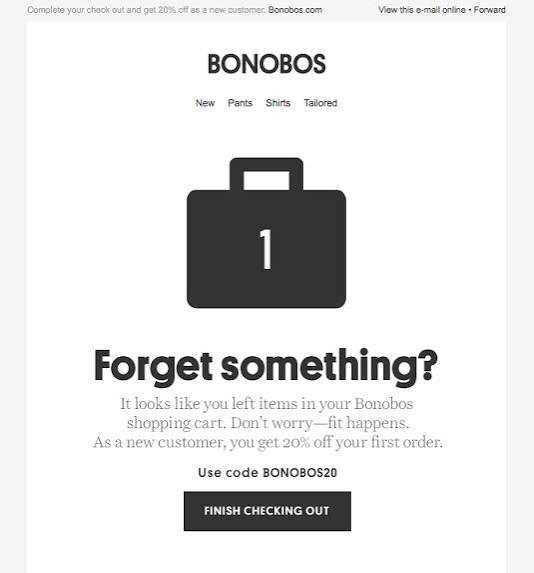
Bonobos sends abandoned cart emails with codes like BONOBOS20 to nudge checkout completion.
Free gift coupons
Free gift offers often convert better than plain discounts because they feel like a bonus, not a price cut. Instead of saying “save ₹X”, you’re saying “get something extra”.
They work especially well for:
- Increasing average order value
- Moving specific products
- Making an offer feel more premium.
You’ll usually see simple codes like:
- FREEGIFT
- GIFTWITHORDER
- FREESAMPLE
- BONUSITEM
- EXTRAGIFT
- FREEBIE
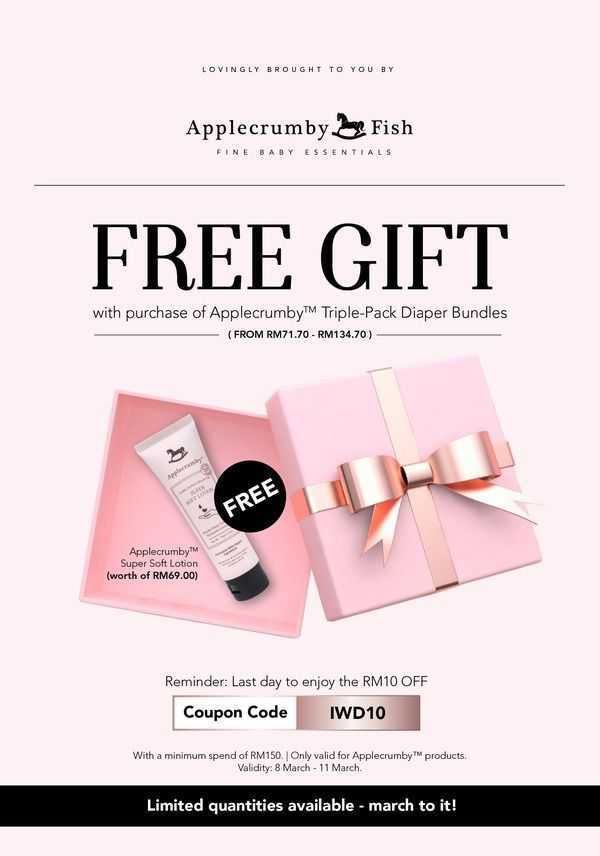
Applecrumby runs this type of campaign by offering a free gift with purchase on selected bundles, combined with a coupon code.
The customer feels like they’re getting more value, not just a discount, which often makes this easier to say yes to.
Product bundle coupons
These are perfect when you want customers to add one more item instead of just buying one thing.
Use straightforward names:
- BUNDLE20
- BUYMORE10
- COMBODEAL
- ADDON10
- PAIRDEAL
- SET20
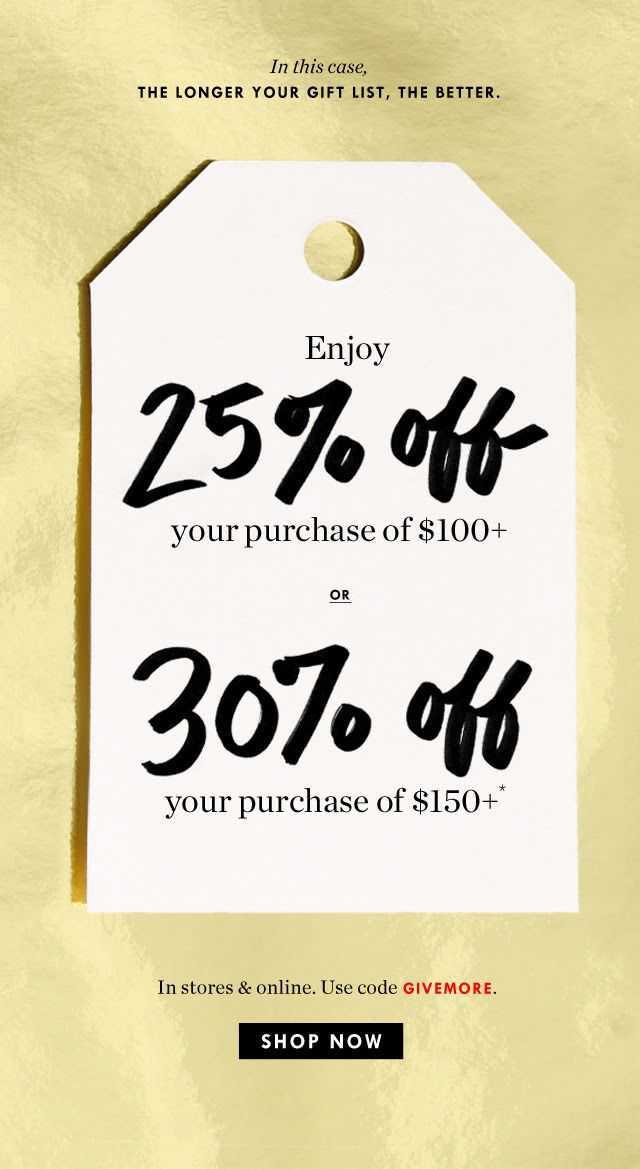
Many brands run bundle-value or tiered discount offers like this, where the discount increases as the cart value goes up (for example: 25% off above $100, 30% off above $150).
Birthday coupons
These aren’t about discounts. They’re about making the customer feel remembered.
Birthday coupons work because they arrive on a personal day, when the customer is already in a good mood and more likely to treat themselves.
Common patterns:
- BIRTHDAY10
- HBD20
- BDAYGIFT
- SPECIALDAY
- FORYOU
Pro-tip: If you run a WooCommerce store, automate birthday coupons instead of sending them manually. Send them a few days before the birthday with a short expiry window (for example, 7 days).
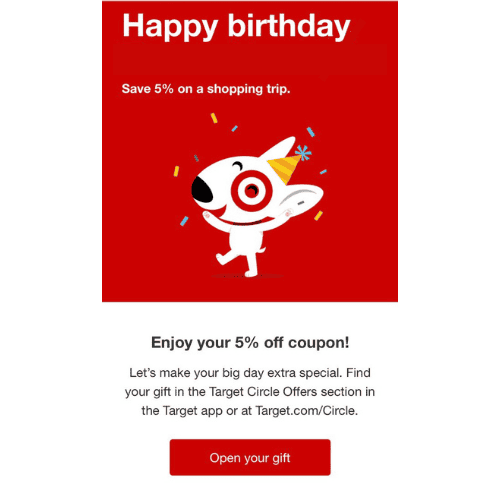
Target (Circle) sends personalized birthday offers like “5% off your entire purchase” as a gift. It doesn’t feel like a promotion. It feels like a reward.
QR code coupons (offline)
QR code coupons are great when you have any offline touchpoint — packaging, flyers, retail counters, events, or even visiting cards.
One scan and the customer is back on your site.
Keep the codes simple:
- SCAN10
- QRDEAL
- INSTORE20
- OFFLINE10
- STOREVISIT
- THANKYOU10
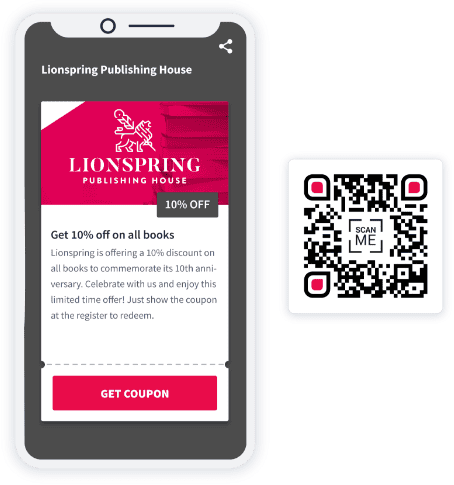
Lionspring Publishing House, for example, uses QR code coupons like this to let customers scan and instantly unlock a 10% discount on their books.
Emotional gifting coupons
These aren’t really about saving money. They’re about making the customer feel noticed. These work beautifully around birthdays, anniversaries, or festivals.
Use warm, human codes:
- FORYOU
- GIFT10
- LOVE20
- SPECIAL10
- JUSTFORYOU
- HAPPYDAY
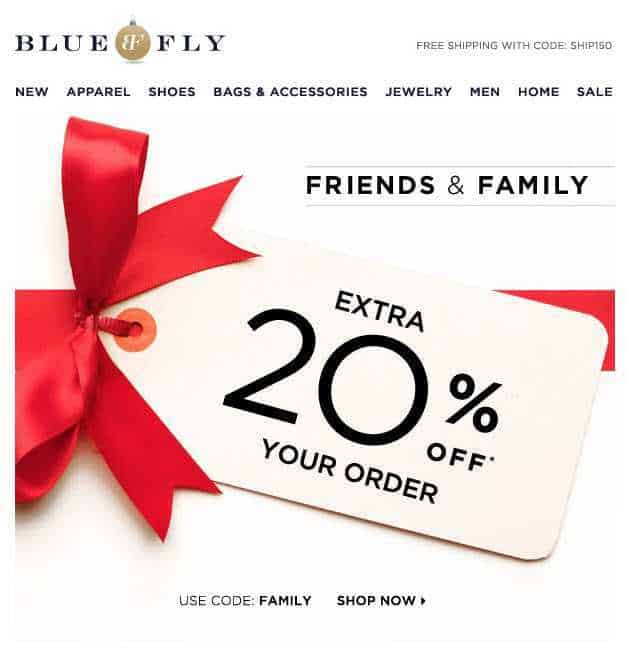
Bluefly, for example, runs “Friends & Family” style campaigns like this, where the offer feels more like a gift than a discount, a simple “extra 20% off” shared with people who already like the brand
Social media challenge coupons
Encourage customers to share your product, tag friends, or complete a social challenge to unlock a coupon.
Add a form or quiz link to the social post. Once the user completed that, send email with the coupon code embed to the URL. Clicking that URL will auto-apply a discount for the users.
Simple participation-style codes work best:
- POST10
- SHARE20
- CHALLENGE15
- TAG10
- JOIN10
- FUN10
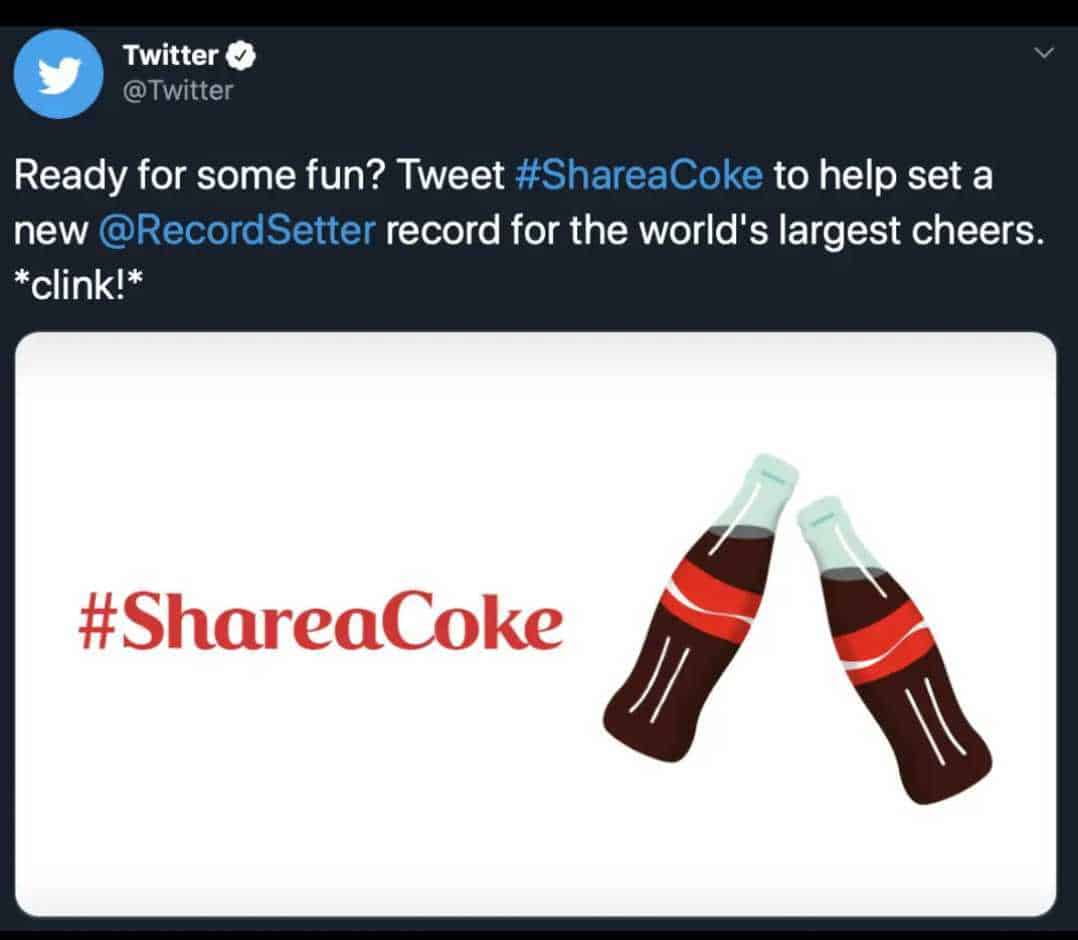
Coca-Cola’s famous #ShareACoke campaign is a great example of how social participation can be turned into massive engagement. People were encouraged to post, share, and tag using the hashtag, turning the campaign into a social movement.
Gamified coupons (Spin the wheel, scratch cards, etc.)
These don’t just give discounts. They turn discounts into an experience.
Gamified coupons work because people are more likely to engage when there’s a sense of chance, fun, or curiosity, even if the reward is small.
Common rewards inside these:
- 5% OFF
- 10% OFF
- Free shipping
- ₹100 off
- “Better luck next time”
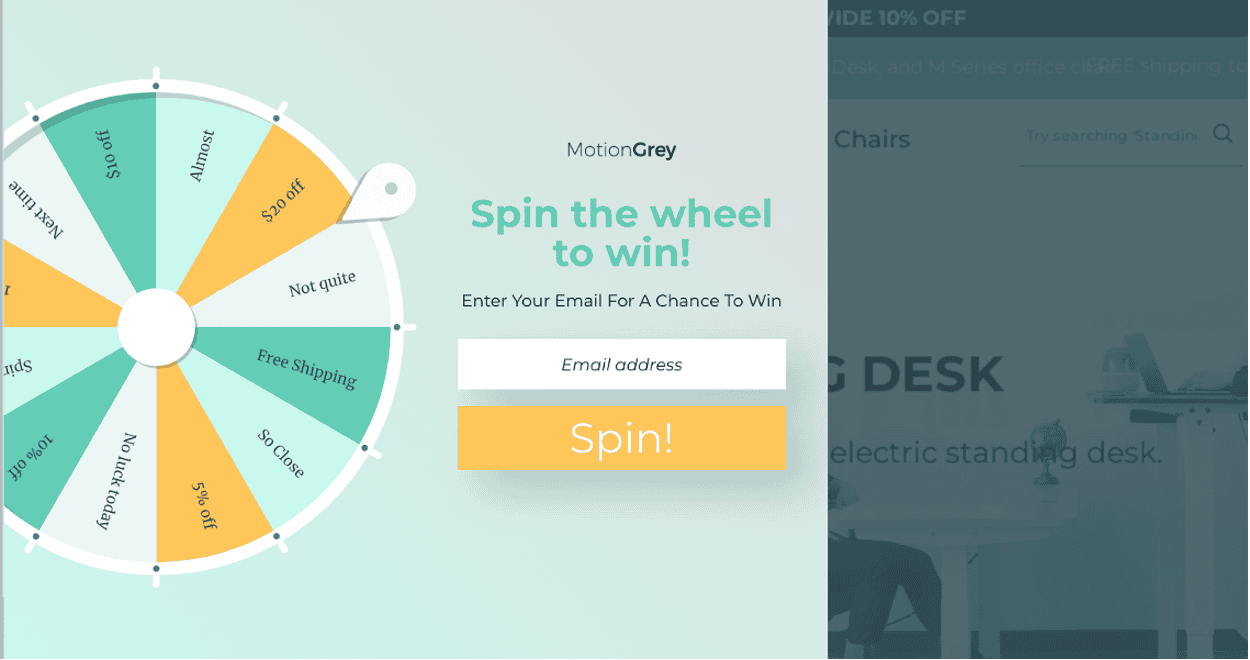
Many ecommerce stores use spin-the-wheel popups (like MotionGrey) where users enter their email and spin to win a coupon before leaving the site.
Next-order coupons
These look small, but they quietly build repeat revenue. The best place to show them is after checkout or inside the order confirmation email.
Keep them friendly and obvious:
- NEXT10
- SEEYOUAGAIN
- THANKYOU5
- COMEBACK10
- RETURN10
- AGAIN10
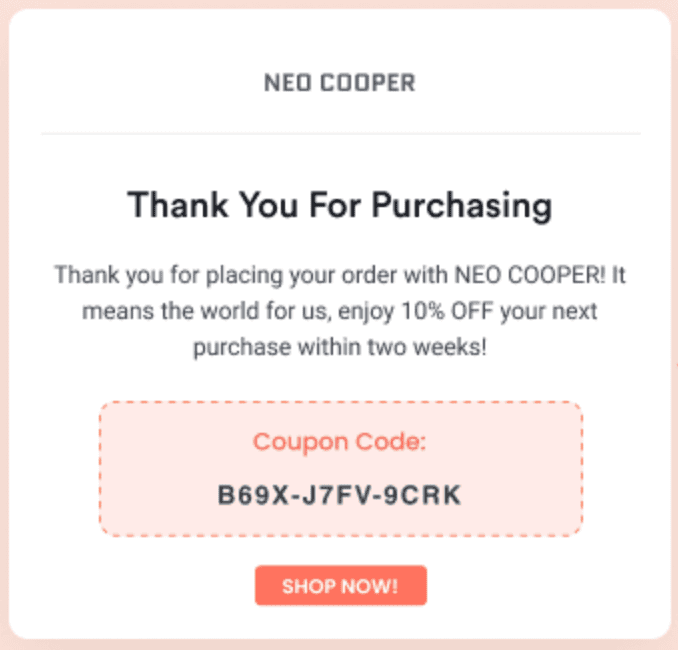
Take this example of Neo Cooper motivating their customers immediately after this purchase with the next order coupon code inside the order confirmation email or on the thank-you page.
Referral coupons
These turn your customers into your sales team. The trust is already there, the coupon just makes it easier.
Use clear, give-and-get style codes:
- REFER10
- GIVEGET
- FRIEND20
- INVITE10
- SHAREANDSAVE
- BOTH10
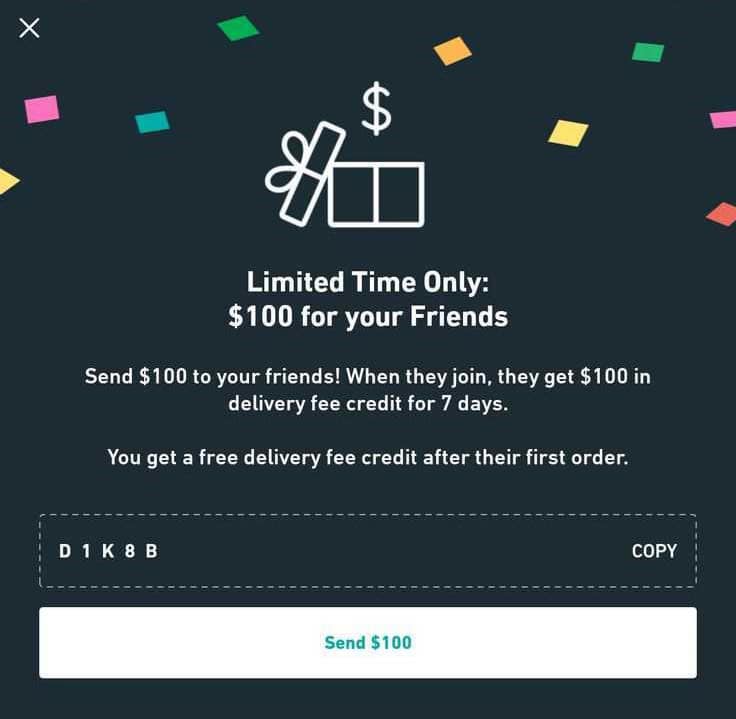
A lot of DTC brands use “Give ₹X, Get ₹X” style referral coupons.
Free shipping coupons
This one is boring. And extremely effective. Shipping cost is one of the biggest reasons people drop off at checkout.
Removing it often works better than giving a bigger discount.
Keep it dead simple:
- FREESHIP
- SHIPFREE
- NOSHIPPING
- FREEDELIVERY
- DELIVERYFREE
- SHIP0
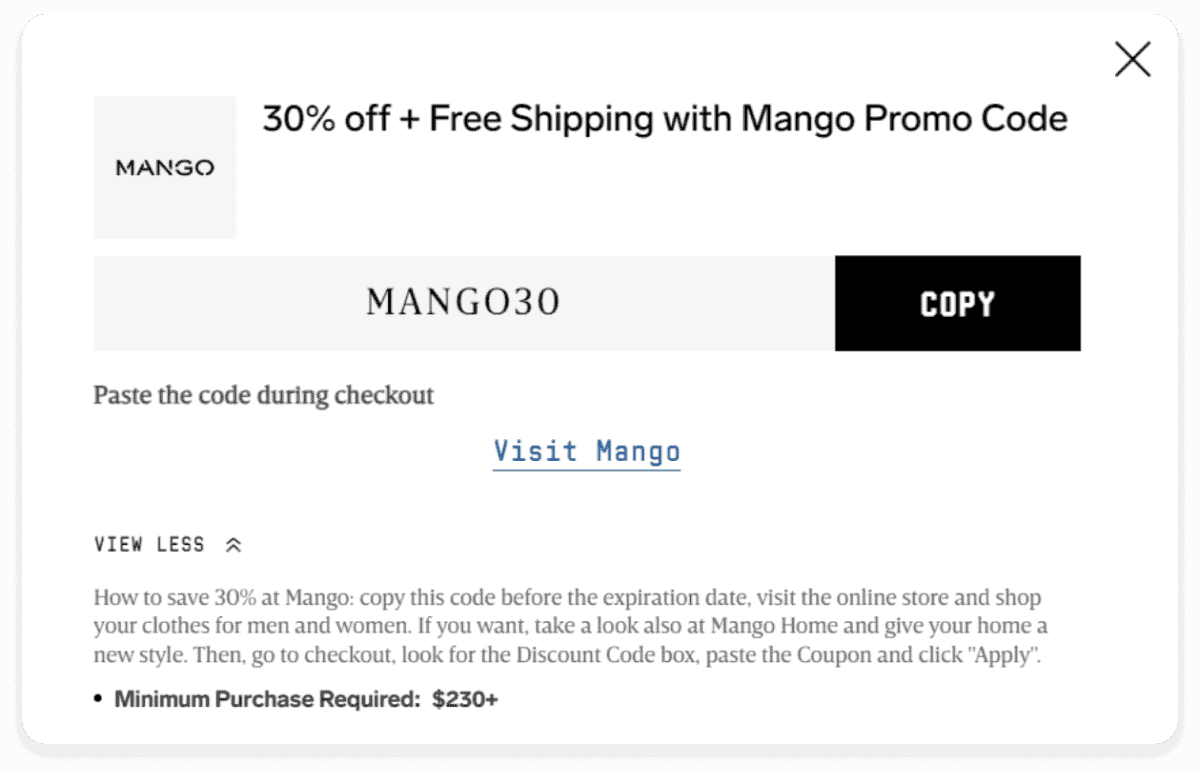
Almost every big ecommerce store uses free shipping thresholds or free shipping codes during key sales.
For example, here is the coupon issued by Mango by the name MANGO30 for free shipping along with additional discounts.
Tools that make coupon campaigns easier in WooCommerce
Running a WooCommerce store, creating a few coupons is easy.
But managing coupons across campaigns, seasons, emails, and landing pages quickly becomes messy.
That’s where you need more than just basic coupon settings.
These capabilities make coupon campaigns in WooCommerce simpler and more reliable:
- Auto-apply coupons
Removes the need for customers to enter codes manually and reduces errors and drop-offs. - Coupon scheduling
Lets you plan and run time-bound campaigns without manual activation or deactivation. - Store credits instead of refunds
Helps retain revenue by offering credits customers can use on future purchases. - Bulk coupon generation
Required for influencer, referral, loyalty, and giveaway campaigns that need unique codes at scale. - URL-based coupons
Applies discounts automatically when customers click a link from email, ads, or messages.
This is exactly why many WooCommerce stores use Smart Coupons by StoreApps.
It doesn’t add “another feature”, it replaces half a dozen manual coupon workflows with one system that actually scales.
If coupons are a regular part of your sales strategy, Smart Coupons isn’t optional, it’s infrastructure.
Where to promote coupon codes
A coupon only works if people see it at the moment it influences their decision.
Here are high-impact places to share your codes:
- Homepage banners and popups: Great for welcome coupons and seasonal offers. Catch attention as soon as someone lands.
- Product pages: Show relevant coupons where customers are deciding what to buy. For example: “Add $50 more and use FREEDELIVERY.”
- Cart and checkout pages: These are high-intent moments. A well-placed coupon here can save the order.
- Email: Use coupons in welcome series, abandoned cart reminders, and post-purchase / next-order emails. Still one of the highest-ROI channels.
- SMS / WhatsApp: Best for time-sensitive promotions like flash sales or location-based offers.
- Social media and influencer content: Influencers can share exclusive codes, and you can track which channels actually drive sales.
- Packaging, receipts, and QR codes (offline): Add a coupon to the packing slip or receipt to bring customers back for another purchase.
The goal isn’t to show coupons everywhere. It’s to show the right coupon at the moment someone is deciding whether to buy.
Turn coupon ideas into real sales
Coupon ideas are easy. Turning them into sales is about execution.
The stores that see real results don’t run more discounts, they run relevant ones.
They use simple codes, show them at the right moment, and remove friction wherever possible.
A welcome coupon helps a first-time buyer take the first step. A free shipping nudge saves a cart. A next-order coupon quietly builds repeat revenue.
The difference is consistency and control.
When coupons are easy to apply, scheduled properly, and matched to how customers actually shop, they stop being “offers” and start becoming a reliable sales lever.
Start small. Pick one or two coupon types from this list. Test where they show up. Then scale what works, without making coupon management harder than it needs to be.
That’s how coupon ideas turn into real sales.
FAQ
Q1. Do promo codes increase sales?
Discounts and coupon codes can change the perceived value of products and services by making customers feel like they are getting more for their money.
Q2. What is coupon marketing?
Coupon marketing is a business tactic to persuade customers to purchase by offering special deals and discounts.
Q3. What can I write in a promo code?
You can write the event, offer type and discount amount in the promo code — like BIRTHDAYGIFT, or FLASHSALE10.
Q4. How to create a good promo code?
Keep the code short, easy to grasp and relevant to the event or offer it is based upon.
Q5. What is a unique promo code?
A unique coupon code is one-time-use coupon code generated for a specific customer — often created for tracking or personalized offers.
Thank you for revealing some really useful secrets on how to use effective coupon code ideas.
Thank you for a great guide to how to use coupons in practice!
Just what I was searching for, thankyou for putting up.